Ancient Mayan Biohacking Wisdom with Grandmother Flordemayo
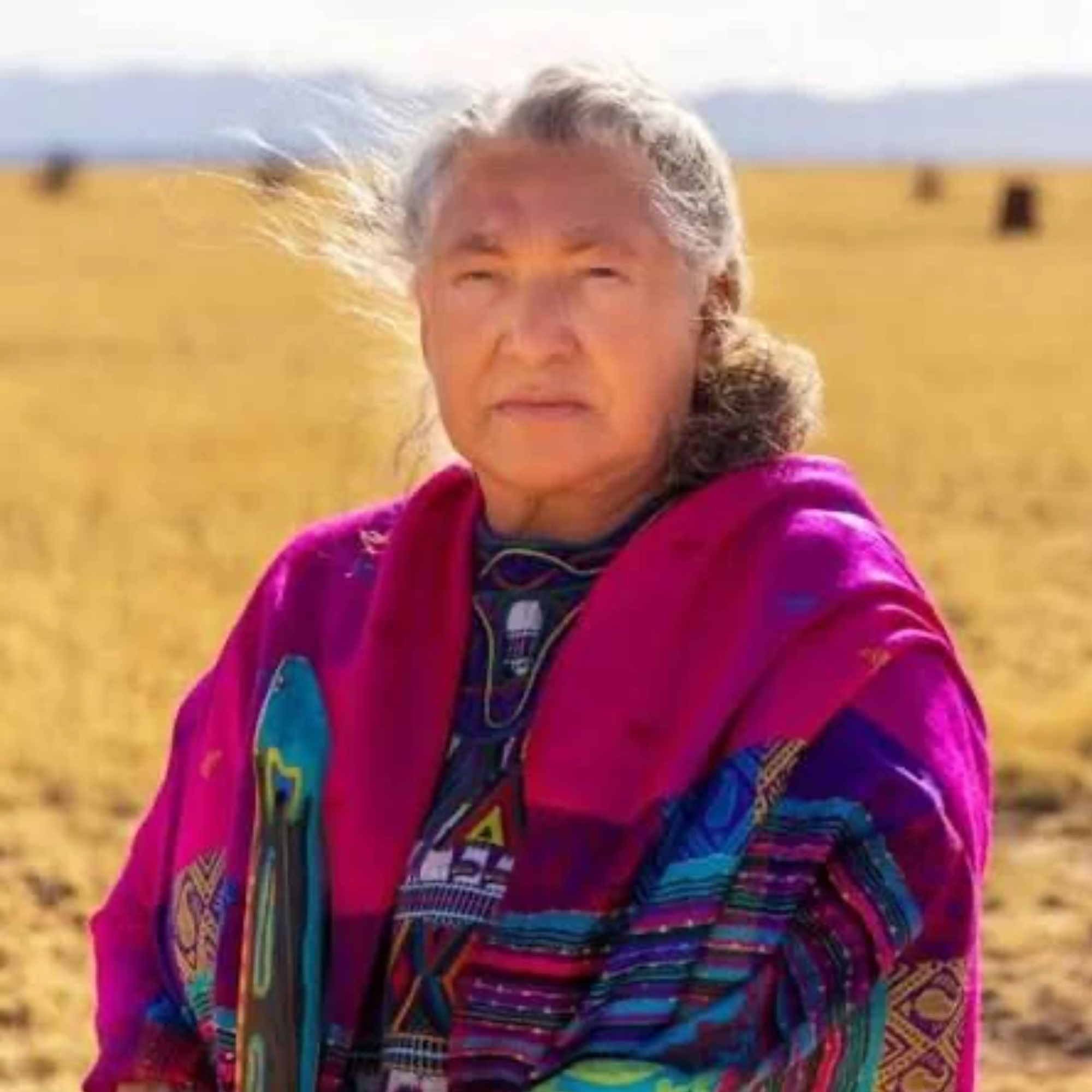
If you think biohacking is only about supplements, sleep tracking, and workout routines, this conversation will shift your perspective. In this interview, Grandmother Flordemayo shares a different framework for longevity—one rooted in spirit, nature, ceremony, and a lived relationship with the sacred. Her wisdom offers a reminder that your body is not separate from your environment, your emotions, or your connection to Creator.
What stands out most in her teaching is how practical it is. She talks about healing as something you practice, not something you passively receive. She also makes a compelling case that our disconnection from nature is not just a lifestyle issue—it is a human problem with spiritual consequences. If you are looking for a deeper way to think about wellness, healing, and aging, this conversation offers a powerful place to start.
Who Is Grandmother Flordemayo?
Grandmother Flordemayo is a Central American-born healer, elder, and founding member of the Thirteen Indigenous Grandmothers. She describes herself as coming from a family of healers, where teachings were passed down orally through the home rather than through formal schooling.
That matters, because her view of health and spirit is not abstract. It comes from a lifetime of direct learning about ceremony, prayer, the four directions, nature, and the relationship between human beings and the sacred. In her telling, those teachings are still alive—not as museum pieces, but as living knowledge carried by people and communities today.
For readers who want to understand her perspective, that’s the key starting point: she is not offering theory from a distance. She is speaking from a tradition that has been practiced, preserved, and lived.
The Real Cost of Disconnection From Nature
One of the most memorable parts of the conversation is her story of moving from Central America to New York City as a child. She describes it as devastating. Not because the move was inconvenient, but because it severed her from the natural world she knew.
She had never seen concrete before. She had never lived in a place without trees. She had never been in a building with an elevator or felt so far from the ground. For a child raised in relationship with nature, the city felt alien.
That story becomes even more powerful when she describes visiting the New York Botanical Garden. Standing with one foot inside a glass building and one foot outside, she suddenly felt the spirit of the plants. Then she heard a message: “Child, this is the future of humanity.”
Her reaction was not excitement. It was grief.
That moment carries a warning that applies far beyond one childhood memory. Grandmother Flordemayo is not just talking about scenery. She is talking about what happens to human beings when we replace living systems with imitations of life. A glass room full of plants is not the same as a forest. A synthetic world may look functional, but it does not feed the same part of us.
This is why so many people feel better when they get outside, put their hands in soil, walk barefoot, or sit near trees. According to her teaching, that response is not sentimental. It is spiritual biology.
Why Spiritual Connection Is the Foundation of Longevity
Because this conversation is framed around biohacking, Ashley asks a key question: Is spiritual connection the real foundation of longevity?
Grandmother Flordemayo’s answer is yes—but with an important nuance. She does not describe spirituality as a vague belief system. She describes it as a living relationship. Her words point to “falling in love again and again” with Creator, and entering into sacred communion.
That idea changes everything. Instead of thinking of prayer or meditation as a ritual you check off, she presents them as an ongoing alignment. The point is not just to ask for things. The point is to enter into relationship. She says she consciously calls herself into that connection throughout the day, and that this communion moves through the physical body continually.
She also offers a useful concept for modern readers: everything organic has light. That means trees, flowers, grass, sand, and even other people are all part of a continual exchange. When you are in contact with living things, you are not just “spending time outside.” You are participating in a field of relationship.
Her framework helps explain why so many modern wellness practices—breathwork, meditation, gratitude, prayer, forest bathing, even earthing—feel effective. They are not merely relaxing habits. They are ways of returning to alignment with life.If you want to think about longevity differently, this is the shift:
-
Don’t begin with optimization.
-
Begin with relationship.
-
Let nourishment, movement, and recovery grow out of that foundation.
Healing Begins With Responsibility, Not Rescue
When the conversation turns to healing, Grandmother Flordemayo offers one of the clearest statements in the interview: human beings have the capacity to heal themselves.
But she does not say that healing is automatic. She says it requires trust, belief, and surrender. You have to ask for help, enter into dialogue with Creator, and be willing to learn how to heal yourself.
She also makes it clear that healing is not one-size-fits-all. In her tradition, healing may involve:
-
herbs
-
stones
-
ceremony
-
chanting
-
humming
-
visualization
-
sacred bathing
-
fire
-
mud
-
water
What makes this especially useful is that she does not treat these as magical shortcuts. She treats them as tools within a deeper relationship. In other words, the method matters, but your participation matters more.
That is why she emphasizes doing healing work for yourself first. Once you have done that, you can help your family. Then your community. Then, in a broader sense, the earth itself.
This is a very different model from the one many people are used to. In the modern world, healing is often outsourced to experts, products, or protocols. Grandmother Flordemayo’s message is more demanding—and more empowering. You are not just a patient. You are a participant. A useful takeaway here is to ask yourself:
-
What practices help you feel more connected to your own body?
-
Where are you waiting to be rescued instead of taking responsibility?
-
What small daily ritual could help you return to center?
Ceremony, Frequency, and the Power of Shared Intention
Ashley brings up frequency as a healing modality, and Grandmother Flordemayo confirms that the idea makes sense within a ceremonial framework. Everything has frequency, she explains, but ceremony is about invocation—consciously calling in the energies, spirits, and directions you want to work with.
That means the fire is not just symbolic. It is a vessel of relationship.She describes fire ceremony as something that can be as simple as a candle or as complex as a full ritual. What matters is communion. The fire helps create an environment where prayer, intention, and spiritual presence can gather. In her words, you call upon the four directions, the four sacred elements of life, and the guardians that support the work.This is where modern readers can connect ancient practice with familiar ideas. A fire ceremony is not just about flames. It is about:
-
focus
-
shared intention
-
energetic coherence
-
reverence
-
participation
Her description also shows why ceremony can feel so powerful and so challenging. Ashley shares that some of the people drawn to the fire ceremonies he attended seemed broken, overwhelmed, or in need of rescue. Grandmother Flordemayo’s response is direct: people must do their own work. Healing is not something that happens to you while you remain unchanged.
That honesty is important. It prevents spiritual practice from becoming performance. Ceremony is not a substitute for responsibility. It is a container that supports transformation when you are ready to meet it.
Humanity Is in a Spiritual Renaissance
Near the end of the conversation, Grandmother Flordemayo shares a vision that frames everything else she said. In that vision, she was told that humanity is in a spiritual renaissance.
That does not mean everything is easy. She is clear that some people will grow, liberate themselves, and move forward—while others may remain stuck in old ways of seeing and being. But the larger message is hopeful: transformation is happening.
She reinforces that hope with one of the most beautiful lines in the interview: the Maya teach that we are children of today, yesterday, and tomorrow. In other words, we are not only living in the present moment. We are also shaped by what came before and what is still unfolding.
For anyone feeling overwhelmed by modern life, that idea matters. It suggests that your choices today are not isolated. They are part of a larger movement toward spiritual maturity—or away from it. Her advice is simple and grounded:
-
take one moment at a time
-
be present
-
receive what Creator is giving you
-
keep doing your inner work
-
include everybody
That final point is especially important. Her vision of healing is never purely individual. It is collective. If you are growing, your growth should serve more than just your own comfort.
Frequently Asked Questions
What does Grandmother Flordemayo mean by spiritual biohacking?
She means that true longevity comes from your relationship with spirit, nature, and Creator—not just from diet, exercise, or supplements. In her view, spiritual connection is the foundation that makes all other wellness practices meaningful.
Is ceremony only for people from Indigenous traditions?
In this conversation, Grandmother Flordemayo emphasizes that traditional teachings are held within specific lineages and communities. The deeper lesson for everyone else is to approach ceremony with respect, responsibility, and humility rather than treating it like a trend.
How does nature support healing, according to this interview?
Nature supports healing because living things carry light and frequency. Being around trees, plants, earth, and natural elements helps restore a sense of connection that modern synthetic environments often weaken.
What is the biggest takeaway from this conversation?
Healing is not something you receive passively. You have to participate, take responsibility, and build a daily relationship with the sacred. That is true whether you are working on your body, your emotions, or your spiritual life.
Hacking Ancient Consciousness with Andrew Collins