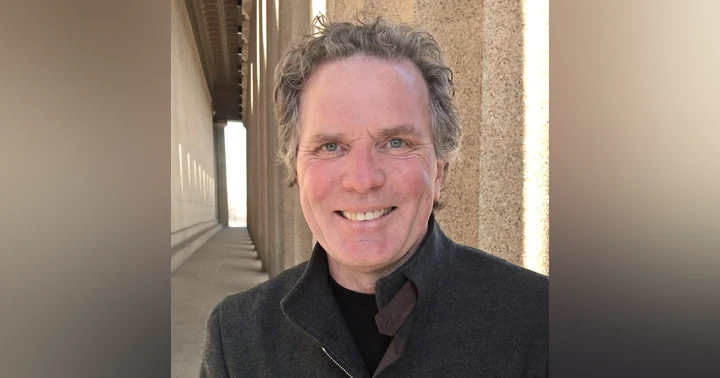
Why Past Life Regression is the Ultimate Biohack with Mystic Uri Lee

If you’ve ever felt stuck in the same relationship patterns, overwhelmed by worry, or like you’re chasing a life that still doesn’t feel like yours, you’re not alone. In this conversation, hypnotherapist and spiritual guide Mystic Uri shares how past life regression, shadow work, and spiritual surrender can help you biohack the deeper beliefs shaping your life today.
What stood out most was her idea that many of your biggest blocks are not random—they’re repeated patterns rooted in childhood, ancestry, and, for some people, even past lives. Whether you’re deeply spiritual or just curious, there’s a practical lesson here: healing starts when you stop running from the patterns and start learning what they’re trying to show you.
From Fashion to Healing: The Life Experience That Changed Everything
Before she became known for spiritual guidance, Uri Lee built a successful career in fashion. She worked in New York and Los Angeles, earned a lot of money, and lived what many people would call a high-achieving life.
But success on the outside didn’t match what was happening on the inside. She describes living for years with a constant pressure to stay a certain size, look a certain way, and perform a version of womanhood that fit what the world expected. That pressure wasn’t just about vanity. It became part of how she saw her worth.
For Uri, that was one of the first cracks in the story she had been living. She had achieved the external markers of success, but her soul was still asking a bigger question: Why doesn’t this feel like enough?
That question eventually pushed her toward prayer, inner reflection, and what she now sees as the beginning of her spiritual awakening.
The hidden cost of “having it all”
A lot of people can relate to Uri's story even if their careers look totally different. You can be productive, admired, and financially stable and still feel deeply disconnected. That disconnect often shows up as:
-
Chronic dieting or body shame
-
Relationship frustration
-
A sense of emptiness after achievement
-
Feeling like you’re always “performing” instead of living
Uri's story is a reminder that success doesn’t automatically equal alignment. If your inner world is out of sync, external wins may not feel satisfying for long.
The Core Wounds That Shape Your Relationships
One of the strongest themes in this conversation is Uri's belief that many recurring life problems come from core wounds—especially the wound of not feeling “good enough."
For her, that wound began early. Her mother was seen as exceptionally beautiful, and her father’s attention reinforced the idea that beauty translated into love, approval, and value. As a child, Uri internalized a painful belief: if she didn’t look like her mother, maybe she wasn’t enough.
That belief followed her into adulthood. It showed up in dieting, in self-image struggles, and in relationships. She also describes growing up in a culture that valued sons more than daughters, which pushed her toward a more masculine way of being. Over time, those influences shaped how she moved through the world—and who she attracted.
Why your relationship patterns may not be random
Uri says we often repeat familiar dynamics in adulthood, especially with partners who mirror the emotional energy of our parents. In her case, she realized she had married a man whose role in her psyche echoed the dynamic she experienced with her mother—someone beautiful, admired, and tied to the feeling of worth.
That’s why she believes relationship conflict can be more than a compatibility issue. It can be a mirror. Some of the signs she points to include:
-
Choosing partners who trigger the same emotional pain
-
Feeling unworthy unless you’re getting attention or validation
-
Confusing love with performance
-
Repeating family patterns without realizing it
This is where the idea of a “core wound” becomes useful. Instead of asking only, “Why does this relationship hurt?” you can also ask, “What old belief is this relationship activating in me?”
How shadow work changes the pattern
Uri emphasizes that healing isn’t just about seeing the light. It’s also about facing the shadow.
She learned this after initially trying to heal through forgiveness, plant medicine, and spiritual openness alone. At first, that helped her become more compassionate. But later, she realized that if she skipped the hard parts—the fear, grief, and unresolved pain—she wasn’t truly healing. She was bypassing.That distinction matters.Shadow work asks you to look directly at the parts of yourself you’d rather avoid:
-
Resentment
-
Shame
-
Fear of abandonment
-
Need for approval
-
Feelings of inadequacy
Only when those parts are acknowledged can they begin to change.
Why Worry Keeps You Stuck in the Future
A major takeaway from this conversation is Uri's view that many people live in the future instead of the present.
She sees worry as one of the clearest signs of this. When you’re constantly trying to control outcomes, predict problems, or secure a perfect future, you’re not really living. You’re bracing.
According to Uri, this is one of the biggest energetic blocks she sees in the people she works with. They’re not just anxious—they’re disconnected from the present moment and from their deeper purpose.
That future-focused mindset creates a few problems:
-
You miss what is actually happening now
-
You treat life like a race toward an outcome
-
You stay attached to fear instead of possibility
-
You ignore the soul-level reasons you’re here
Her answer is simple, but not always easy: surrender.
Surrender is not giving up
Uri doesn’t describe surrender as passivity. She describes it as releasing the need to force every outcome.
In her own life, surrender happened when she stopped demanding that life give her a husband and instead opened herself to whatever path God had for her. That shift, she says, created space for something deeper to emerge.
The practical version of this is living one day at a time:
-
Focus on what’s in front of you today
-
Do your best with the day you have
-
Let go of needing certainty before you can move forward
-
Trust that clarity often comes after release, not before it
This is especially helpful if you’re always planning, overthinking, or trying to “solve” your life before you’ve actually lived it.
Spiritual Awakening Isn’t Always Peaceful
Many people think spiritual awakening is supposed to feel blissful, magical, and clean. Yuri says that’s a misconception.
In her experience, awakening often begins when the physical, emotional, and spiritual parts of life are no longer in balance. If you focus only on the body—or only on the mind, or only on spirituality—something stays out of alignment.
That imbalance can show up as:
-
Emotional instability
-
Recurring fear
-
Body-based stress or illness
-
A sense of confusion or emptiness
-
Repeated life lessons that never seem to resolve
She also stresses that spiritual growth requires discernment. Light alone isn’t enough if you’re avoiding the shadow. Love alone isn’t enough if you’re skipping the pain that needs to be processed.
Dreams, déjà vu, and the clues you already haveIf you’re skeptical about past lives, Uri suggests starting with the experiences many people already recognize:
-
You instantly feel familiar with a person you just met
-
You’re drawn to a culture or place you’ve never visited
-
You have recurring dreams that feel symbolic or emotionally intense
-
You seem to have a natural skill you never formally learned
She sees these as clues that your subconscious is carrying more than this lifetime alone.
Dreams, in particular, play a big role in her framework. She believes they often reflect emotional material that wants to be processed. They may not be literal, but they can reveal fear, longing, unresolved grief, or repeated patterns that your waking mind has not fully addressed.
The takeaway is not that every dream is a prophecy. It’s that your inner life is constantly speaking to you—often more clearly than your conscious mind.
What Uri Believes Humanity Is Waking Up To
Toward the end of the conversation, the discussion broadened from personal healing to collective change. Uri believes humanity is waking up to the fact that many of the systems we’ve lived by—around success, identity, religion, and worth—have not actually created fulfillment.
That’s why so many people are questioning:
-
Why “having everything” still feels empty
-
Why marriages and relationships break down so often
-
Why identity is so tied to appearance and status
-
Why so many people feel unworthy by default
Her view is that people are beginning to see through the “matrix” of inherited beliefs. And once one person wakes up, it can ripple outward to family, community, and culture.
Your worth is not up for negotiation
This may be the most practical part of Uri's message. She believes many of your deepest wounds can be traced back to a single false idea: that you are not enough. Not pretty enough. Not smart enough. Not successful enough. Not worthy enough.
And she thinks modern life constantly reinforces that idea through beauty standards, media, consumer culture, and comparison. Her work, then, is not just about healing past lives or interpreting dreams. It’s about helping people return to the truth that they are already worthy.
That’s the point where spiritual practice becomes useful in daily life:
-
You stop outsourcing your value
-
You stop chasing validation
-
You start living from inner stability
-
You make choices from love instead of fear
Frequently Asked Questions
What is past life regression?
Past life regression is a therapeutic approach that uses guided hypnosis or deep relaxation to explore memories, symbols, or experiences that may relate to earlier lifetimes. Practitioners like Yuri use it to uncover emotional patterns that may still affect the present.
How do I know if I’m stuck in a core wound?
A core wound often shows up as a repeating emotional theme—for example, feeling not good enough, abandoned, unseen, or unlovable. If the same feelings keep appearing across different relationships or life situations, it may be a deeper pattern rather than a one-time problem.
Is spiritual awakening always comfortable?
No. According to Uri, awakening can be unsettling because it often brings shadow material to the surface. It may involve grief, confusion, or the breakdown of old beliefs before it leads to clarity and peace.
What can I do if I’m constantly worrying about the future?
Start by bringing your attention back to today. Uri's approach is to focus on one day at a time, notice what you can actually control, and practice surrender rather than trying to force outcomes.
Can dreams reveal something meaningful?
Yes, dreams can offer clues about emotions, fears, and unresolved patterns. Uri sees them as messages from the subconscious, especially when the same people, places, or themes keep appearing.
Final Thoughts
Uri's story is really about more than past lives. It’s about recognizing the hidden beliefs that shape your choices, relationships, and sense of self. Whether those beliefs come from childhood, ancestry, spirituality, or some blend of all three, the invitation is the same: stop ignoring the pattern and start listening to it.
If you’ve been living in fear, chasing approval, or waiting for your life to feel “enough,” this is your reminder that healing begins with awareness and honesty. You don’t need to have every answer to start changing your relationship with yourself.
If you want to go deeper, listen to the full conversation with Mystic Uri and explore what it means to live from a more present, grounded, and spiritually aligned place.

Quantum Consciousness, AI, and the Return of Mystery Schools with Dr. Theresa Bullard