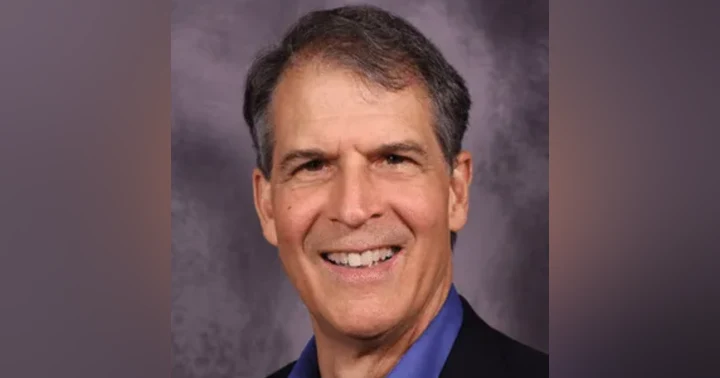
Quantum Consciousness, AI, and the Return of Mystery Schools with Dr. Theresa Bullard

If you feel like the word quantum is suddenly everywhere, you are not imagining it. It shows up in wellness, technology, branding, and even products you would never expect—but not every use of the term means the same thing.
In a recent conversation, Dr. Theresa Bullard-Whyke explored where legitimate quantum ideas end and pseudoscience begins, why consciousness may be more fundamental than many materialist models suggest, and why mystery schools are seeing renewed interest. We also dug into AI, near-death experiences, Kabbalah, and what it means to live as a more conscious human being in a rapidly changing world.
Why Quantum Has Become Such a Popular Word
Dr. Bullard-Whyke opened the conversation by pointing out that quantum has become a kind of cultural shorthand for “new,” “advanced,” or “future-facing.” That makes it appealing for marketers, but it also creates confusion.
A lot of people hear the word and assume it refers to anything mysterious, energetic, or cutting-edge. But in physics, quantum mechanics has a very specific meaning. It describes how reality behaves at the smallest scales, where classical rules do not always apply.
The problem is that the term gets stretched far beyond its scientific roots.
“Quantum is certainly making its way into the zeitgeist of human consciousness,” she explained, “and it’s becoming synonymous with new paradigm or high tech or very future-looking.”
That’s where the tension begins. Some scientists would say quantum effects only apply to tiny particles and highly controlled systems. Dr. Bullard-Whyke takes a broader view: quantum principles may also appear in biology, in consciousness, and even in cosmic structures.
That does not mean every “quantum” claim is valid. It does mean the conversation is bigger than branding. If you want to understand what is real, you have to separate science, metaphor, and marketing.
Where Science Ends and Pseudoscience Begins
Dr. Bullard-Whyke said the boundary is often a matter of perspective. Materialist science tends to stay focused on measurable particles, math, and lab-based reproducibility. Her view is that consciousness itself should not be dismissed so quickly.
She argued that calling something “pseudoscience” is often a way to shut down inquiry before it starts. Whether you agree with her or not, the bigger point is worth considering: language shapes what we are willing to investigate.
If a topic is dismissed too early, you may miss a real insight. If it is accepted too easily, you may fall for hype. The challenge is staying open without becoming gullible.
Consciousness Is Not Just a Brain Activity
One of the most striking ideas in the conversation was Dr. Bullard-Whyke’s view that consciousness is primary—not a byproduct of the brain.
In the mainstream view, the brain produces consciousness the way a computer produces output. In her framing, the brain is more like a receiver and transmitter. Consciousness exists as a field, and the brain interacts with it.
That idea changes everything.If consciousness is fundamental, then human awareness is not limited to neurons firing in the skull. It becomes part of a much larger reality—one that includes quantum fields, subtle energy, and perhaps even dimensions we do not normally perceive.
She connected this to the idea that most of what we experience is only a tiny slice of reality. We perceive a small part of the electromagnetic spectrum. We notice only a fraction of what may be available to us. In her view, expanding consciousness means expanding the range of information you can receive.
Human Consciousness, Sentience, and Life Are Not the Same Thing
Dr. Bullard-Whyke made a useful distinction between several levels of awareness:
-
Sentience — the ability to take in energy and information and respond.
-
Life — the ability to process, grow, replicate, and evolve.
-
Human consciousness — the ability to reason, reflect, discern, and think abstractly.
-
Higher consciousness — spiritual or divine layers beyond ordinary human awareness.
That framework matters because it moves the conversation beyond questions such as “Is AI conscious?” or “Is the brain all there is?” Those are useful questions, but they may be too narrow.
According to her, human beings are not just biological machines. We are layered beings with physical, energetic, and spiritual aspects. That means the work of consciousness is not just thinking more clearly—it is becoming more aware of who and what you are.
Why This Matters for Your Life
If you believe consciousness is more than brain chemistry, you will probably make different choices about attention, intuition, meaning, and purpose. You may take your inner life more seriously. You may question whether your daily habits are expanding your awareness or shrinking it. And you may become more interested in practices that help you tune into deeper levels of experience.
That is the practical side of an otherwise abstract conversation.
AI Is Powerful—but It Is Not Discernment
The conversation naturally shifted to AI, since many people now compare machine intelligence to human consciousness.
Dr. Bullard-Whyke’s take was direct: AI is a tool, not a conscious being. That does not mean it is useless. In fact, she described it as a helpful way to speed up certain tasks or generate ideas you might not have created on your own. But she was equally clear that AI does not have discernment.
And that is the danger. AI can produce convincing output, but it cannot reliably judge truth, nuance, or spiritual relevance on its own. It can mimic creativity, but it cannot tell you whether something is wise, accurate, or aligned.
“It can be a really useful tool,” she said, “but it doesn’t actually have discernment built into it.”
That means the responsibility stays with you.
Why Human Discernment Still Matters
If you use AI without discernment, you risk outsourcing your judgment. That can be fine for simple tasks, but it becomes a problem when the stakes involve health, meaning, belief, or decision-making.
Dr. Bullard-Whyke also drew a line between sentience and consciousness. Even if AI eventually becomes highly responsive or passes a Turing test, that does not automatically make it conscious in the deeper sense she describes.
For her, true consciousness involves soul and spirit—something beyond information processing.That perspective will not convince everyone, but it is a helpful reminder that capability is not the same as wisdom.
A Practical Way to Think About AI
Use AI to accelerate your work, not replace your thinking.
-
Let it draft.
-
Let it brainstorm.
-
Let it help you move faster.
But keep your own voice, ethics, and judgment in charge. If something feels off, question it. If something sounds too confident, verify it. AI can help you create—but it should not be your final authority.
Why Mystery Schools and Kabbalah Are Finding New Audiences
Another major theme in the conversation was the resurgence of mystery schools. Dr. Bullard-Whyke believes this is happening for two reasons. First, people are hungry for meaning again. After years of extreme materialism, many people feel disconnected from purpose. Second, the pace of life, technology, and global change is so fast that people need wisdom, not just information.
She described mystery schools as keepers of ancient wisdom and ethical frameworks—not just a vague interest in esoteric topics.
Mystery Schools Are About Training, Not Just Curiosity
A real mystery school, in her view, is not just a person reading spiritual books and calling it a school. It is a lineage-based tradition with structure, discipline, and transmission. That distinction matters because it separates serious study from trend-chasing.
The point of the path is not to collect interesting ideas. It is to become more conscious, more responsible, and more capable of living from higher principles.
She also emphasized that the mystery school path is not guru-centered. It is empowerment-centered. The goal is not to make you dependent on a teacher. The goal is to give you tools, keys, and practices so you can do the work yourself.
What Kabbalah Showed Her
When Ashley asked about Kabbalah, Dr. Bullard-Whyke explained why it lit her up so strongly. She first encountered it while studying physics and astrophysics, and she was struck by how much Kabbalistic language mirrored modern cosmology.That made her wonder: if ancient teachings captured some of the same principles scientists are only now validating, what else might they contain? She described Kabbalah as:
-
an oral tradition older than many written systems
-
a symbolic and encoded framework
-
a mix of mathematics, mysticism, and spiritual practice
-
a path of spiritual alchemy and soul refinement
What makes Kabbalah unique is that it is not just intellectual. It is experiential. The Tree of Life can be studied as a map of consciousness, creation, psychology, and spiritual development.
And it is not something you master in a weekend. It unfolds over time.
Why the Sefer Yetzirah Feels Hard at First
Ashley mentioned reading the Sefer Yetzirah and feeling like it was going over his head, even though he sensed there was something powerful in it. Dr. Bullard-Whyke said that is completely normal.The text is encoded and deeply symbolic, and without the oral context, it can be difficult to interpret. Her advice was not to rush it. Read a little, sit with it, meditate on it, and return to it over time.
In other words, some texts are meant to be lived into, not just decoded. That is a useful lesson far beyond Kabbalah. The most meaningful teachings often do not reveal themselves all at once.
Near-Death Experiences and the Bigger Picture of Reality
One of the more expansive parts of the conversation was Dr. Bullard-Whyke’s reflection on near-death experiences. She has spoken with people who have had them, though she has not had one herself. She connected them to other altered states such as astral travel and out-of-body experiences, which she sees as evidence that consciousness can shift beyond the physical body.
In her model, human beings have multiple layers—physical, etheric, astral, causal, and spiritual. Near-death experiencers may be encountering one of those layers rather than simply imagining something. She also noted that many NDE accounts share similar features:
-
a sense of leaving the body
-
movement through a tunnel
-
meeting guides
-
a life review
-
a dramatic shift in priorities
What people often bring back is not just a story, but a changed relationship to life. They care less about status and more about love, service, and meaning. They stop treating life as something to consume and start treating it as something to use well.
That idea connects back to the entire conversation. Whether you are thinking about quantum physics, AI, mystery schools, or NDEs, the deeper question is the same: What kind of consciousness are you living from?
Key Takeaways
-
The word quantum is everywhere, but not every use of it is scientifically meaningful.
-
Dr. Bullard-Whyke sees consciousness as foundational, not just a product of the brain.
-
AI is useful, but it does not replace human discernment.
-
Mystery schools are attracting renewed interest because people want depth, purpose, and guidance.
-
Kabbalah offers a symbolic, structured way to explore creation, consciousness, and spiritual growth.
-
Near-death experiences often lead people to value love, service, and meaning over material success.
Frequently Asked Questions
Is quantum consciousness a scientific theory?
Not in the mainstream scientific sense. It is more of a philosophical and metaphysical framework that some people use to explore the relationship between physics and consciousness.
Can AI ever become conscious?
Dr. Bullard-Whyke does not believe AI is conscious now. She sees it as a tool, and she argues that consciousness involves soul and spirit, not just information processing.
Why is Kabbalah so difficult to understand at first?
Because it is an encoded oral tradition with symbolic language, not a straightforward modern textbook. It often makes more sense when studied with context, lineage, and repeated reflection.
What is a mystery school?
A mystery school is a tradition that teaches spiritual and philosophical wisdom through structured, often lineage-based instruction. In Dr. Bullard-Whyke’s view, it is about empowerment and disciplined practice, not passive learning.
What do near-death experiences have to do with consciousness?
They suggest that consciousness may continue or shift beyond the physical body. Many experiencers return with a stronger sense of purpose and a deeper focus on love and service.
Closing Thoughts
This conversation was really about one big idea: reality may be far richer than the narrow material slice most of us focus on every day. Whether you are exploring quantum ideas, testing AI tools, or studying ancient wisdom traditions, the invitation is the same—become more conscious of how you think, what you value, and how you live.
If Dr. Theresa Bullard-Whyke’s perspective resonated with you, the next step is simple: stay curious, but stay discerning. Learn the frameworks, ask better questions, and choose practices that help you grow in awareness and purpose.
Want to go deeper? Explore Dr. Theresa Bullard-Whyke’s work and upcoming events through her website and newsletter: https://theresabullard.com
The Psychedelic Christ and the Light Body: William Henry on Transfiguration, Ancient Christianity, and Human Potential