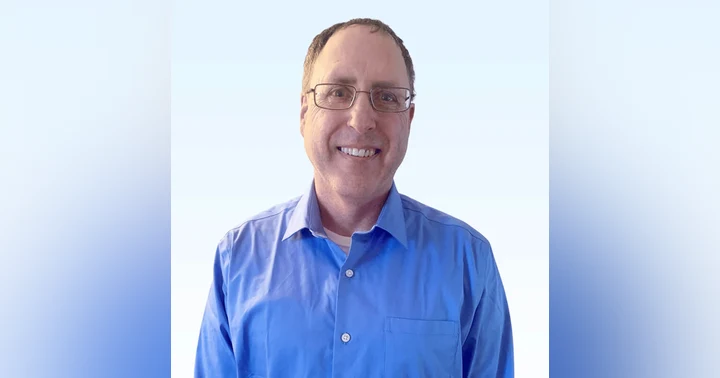
The Psychedelic Christ and the Light Body: William Henry on Transfiguration, Ancient Christianity, and Human Potential
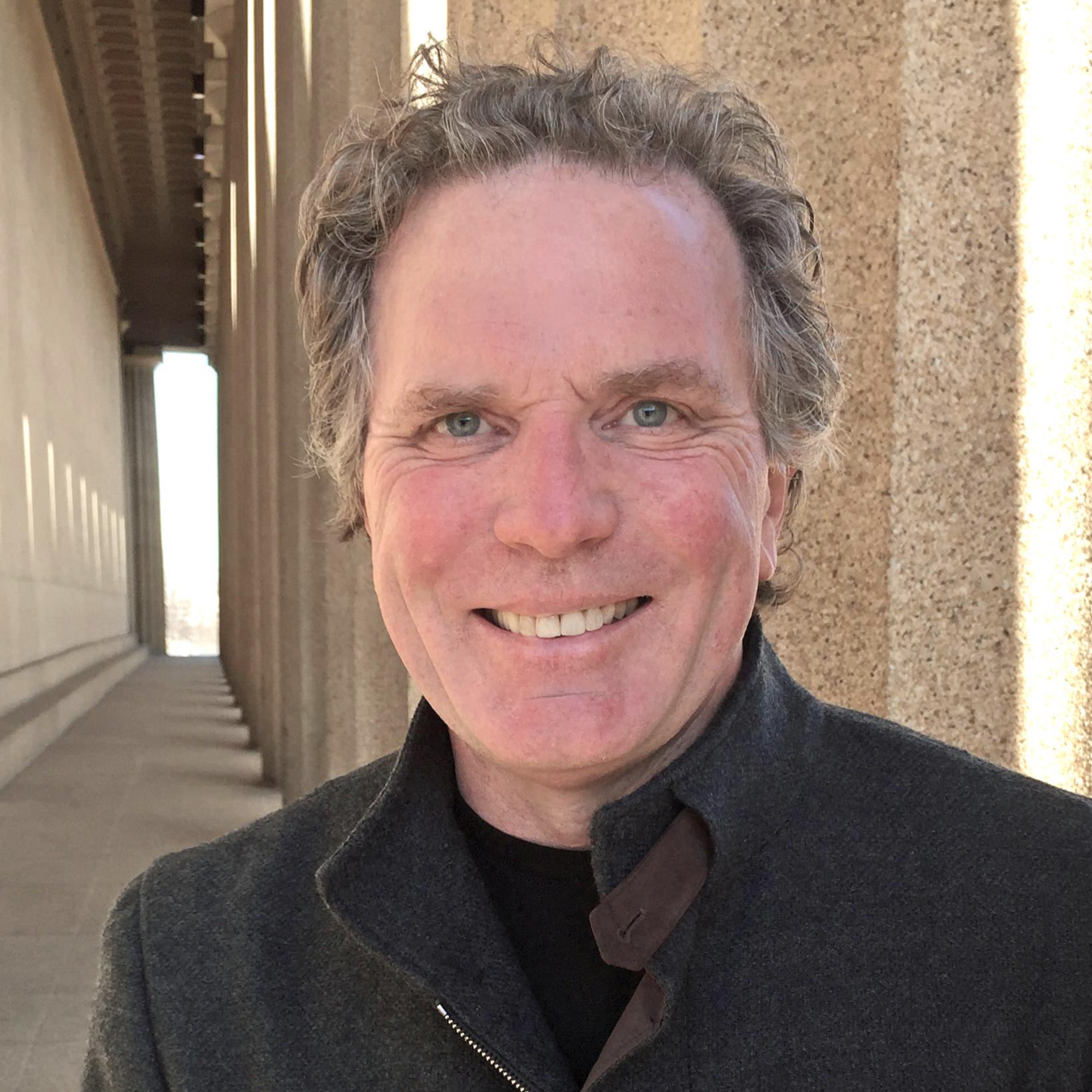
When most people think about Christianity, they think about religion, rules, and belief. But what if the original message was something far more radical—a path toward human transformation? In this conversation, William Henry argues that early Christianity, Gnostic traditions, and even modern biohacking are all circling the same idea: you are meant to become more than you are now.
In this post, you’ll explore Henry’s view of the light body, why he believes Jesus came to demonstrate transfiguration rather than start a religion, and how ancient symbols like the candle, the robe of light, and even the rainbow light body point toward a deeper spiritual technology. If you’re interested in spirituality, consciousness, or the intersection of ancient wisdom and modern human potential, this conversation offers a lot to think about.
What William Henry Means by the Light Body
William Henry has spent decades studying alternative history, Gnostic Christianity, and ancient traditions that describe human beings as capable of transformation. For him, the light body is not just a mystical concept. It is the central thread connecting Christianity, Tibetan teachings, Egyptian symbolism, Sumerian mythology, and modern ideas about consciousness.
He describes the light body as an energetic blueprint within the physical body—something that can be awakened, revealed, and eventually transformed. In his view, this is what different traditions have called the robe of light, garment of glory, or rainbow light body. The language changes, but the idea stays the same: human beings are not fixed, limited creatures. They are in a process of becoming.
Henry explains that Tibetan traditions describe the rainbow light body as a higher vibrational phase of the flesh-and-blood body, capable of interdimensional travel and spiritual transcendence. But he also argues that this teaching is not uniquely Tibetan. Instead, he sees it as a cosmic teaching that appears across cultures because it points to a universal human potential.
That framing matters because it shifts the conversation from belief to possibility. Instead of asking, “Do you accept this doctrine?” you start asking, “What if our bodies and consciousness are capable of more than we’ve been told?”
The Body as a Chrysalis
One of Henry’s most accessible metaphors is the butterfly. In his view, the physical body is like a chrysalis—a temporary form containing something far more radiant inside. The spiritual path, then, is not about escaping the body in a negative sense. It is about revealing what the body has always been designed to become.
That’s why he keeps returning to words like radiance, luminosity, and glory. He’s not trying to be poetic for its own sake. He’s describing a transformation that he believes ancient texts were talking about all along.
Why Henry Says Jesus Was Not Trying to Start a Religion
One of the strongest claims in the conversation is Henry’s insistence that Jesus did not set out to establish a religion. Instead, he believes Jesus came as an example of what a transformed human being looks like.
Henry points to the Dead Sea Scrolls and the Essene community, where he says Jesus was understood as a “high celestial being” who came to help humans put on their “crown of glory” and “robe of unending light.” In that reading, Christianity begins not as institutional religion, but as a revelation of hidden knowledge—knowledge about how the human being is meant to evolve.
This is a major theme in Henry’s work: the idea that original Christianity was about transfiguration, not rule-keeping. He argues that the body is temporary and meant to be transformed, not worshiped as the final form of human existence.
He also connects this to the biblical language around heaven opening, angels descending, and Jesus being baptized. To Henry, these are not just symbolic stories. They point to a real change in consciousness—a divine light or frequency entering the person and activating something latent within them.
The Baptism as Activation
Henry says the baptism of Jesus is a key example. In his interpretation, the descent of the Holy Spirit is not just a spiritual event but an activation—a signal or frequency from a higher layer that “ignites” the body and consciousness.
From there, he sees the robe or garment of light as the outward expression of that inner transformation. In his framework, miracles, higher intelligence, and transfiguration are all connected to this awakening.
That idea makes Christianity feel less like a static belief system and more like a practical spiritual technology. Whether you agree with the interpretation or not, it’s a provocative lens for reading the New Testament.
The Candle, the Pineal Gland, and the Science of Inner Illumination
One of the most memorable parts of the conversation is Henry’s explanation of the candle as an ancient Christian symbol. He says the candle represented the spinal cord, the wick represented the pineal gland, and the oil represented the secretions or energies within the neurosecretory system.
In that model, the goal is not just to “believe” in light—it is to light the candle. The question becomes: how do you activate the system already built into you?
For Henry, the answer begins with higher-frequency light. That light is what triggers inner illumination, consciousness expansion, and the emergence of the robe of light. He connects this to Christian art, where saints and angels are often depicted with flames above their heads.
Those images, he argues, reflect a deeper truth: awakened people radiate.This is where the conversation gets especially interesting for people drawn to both spirituality and biology. Ashley mentions his own experience with biophotonic emission—the idea that mitochondria give off light while producing ATP. Henry immediately connects that to older traditions that described humans as naturally luminous beings.
He agrees that compassion, kindness, meditation, and even certain substances may all play a role in triggering this glow. In other words, the spiritual and the material are not separate. They are different ways of talking about the same phenomenon.
Why This Matters Now
Henry’s point is not that ancient people were scientifically naive. It’s that they may have understood human consciousness in ways modern culture has largely forgotten. If the body can be seen as an energetic system, then spiritual practices are not just “feel-good” rituals. They are technologies for transformation.
That perspective also helps explain why so many traditions emphasize purity, attention, and devotion. In Henry’s view, they are all different strategies for awakening the light already inside you.
Transhumanism, AI, and the Big Question: What Are We Becoming?
The conversation takes a turn when Ashley and Henry move into transhumanism, AI, and the future of human evolution. Here, Henry offers a nuanced position that may surprise people familiar with his earlier work. For years, he says, he was strongly in the “pure human” camp. He argued against transhumanism and warned that technologies like Neuralink could diminish our humanity. But over time, he changed his mind—or at least refined it.
His current view is that the body is temporary and meant to be transformed, so the blanket rejection of technology may be too simplistic. He uses the example of eyeglasses: once considered unnatural or even arrogant, now they are ordinary. His point is not that every technology is good, but that we should be careful about assuming all enhancement is inherently evil.
At the same time, he is clear that trust matters. The danger is not only the technology itself, but the institutions and power structures behind it. He warns that conscious and spiritual people cannot just opt out of the conversation. They need to engage it, because it is already shaping the future.
A More Grounded Way to Think About EnhancementHenry’s argument is that humans have always sought perfection, transcendence, and transformation. In that sense, transhumanism is not an alien intrusion—it may be another chapter in a very old story.
The important question is not simply “Should we use technology?” It is “What kind of beings are we trying to become?” That’s a much deeper conversation, and one that traditional spirituality, science, and biohacking all need to answer together.
The Hope for Humanity: Moving Beyond Fear
If there is a single takeaway from the conversation, it’s Henry’s belief that humanity’s future depends on moving beyond fear. He does not think the answer lies in choosing one pillar—pro-tech or anti-tech, religious or anti-religious, spiritual or scientific.
Instead, he says the real work is to look beyond the pillars.
That means using logic, coherence, and emotional regulation to navigate a time of rapid change. It means remembering that the larger goal is not to win a debate, but to become a more radiant, more conscious, more compassionate human being.
Ashley’s own story about pausing before reacting to a family conflict brings this idea down to earth. In that moment, he describes a shift in consciousness that changed the emotional energy of the entire room. Henry sees that as a real-world example of the light body in action.
Transformation, in other words, is not just an esoteric dream. It shows up in how you respond, how you treat others, and how much power you give to old patterns.
Frequently Asked Questions
What is the rainbow light body?
The rainbow light body is a spiritual concept found in Tibetan and other traditions that describes a higher vibrational form of the physical body. William Henry sees it as a universal idea about human transformation, not just a Tibetan teaching.
Did Jesus found a religion?
According to William Henry’s interpretation, no. He believes Jesus came to demonstrate transfiguration and reveal hidden knowledge about human transformation, rather than create a formal religion.
Is the light body a spiritual or physical idea?
Henry argues it is both. He sees the light body as an energetic blueprint that can be described in spiritual terms, but also linked to biological processes like luminosity, consciousness, and even biophotonic emission.
What does William Henry think about AI and transhumanism?
He does not reject them outright anymore. Instead, he believes the deeper question is whether these technologies help or hinder human transformation, and whether we can engage them without losing our humanity.
How can someone begin exploring these ideas?
Henry’s work suggests starting with open study, meditation, and paying attention to how you respond in daily life. He also recommends exploring his book The Psychedelic Christ for a deeper look at these themes.
What Near-Death Experiences Reveal About Consciousness, Memory, and Healing