What Near-Death Experiences Reveal About Consciousness, Memory, and Healing
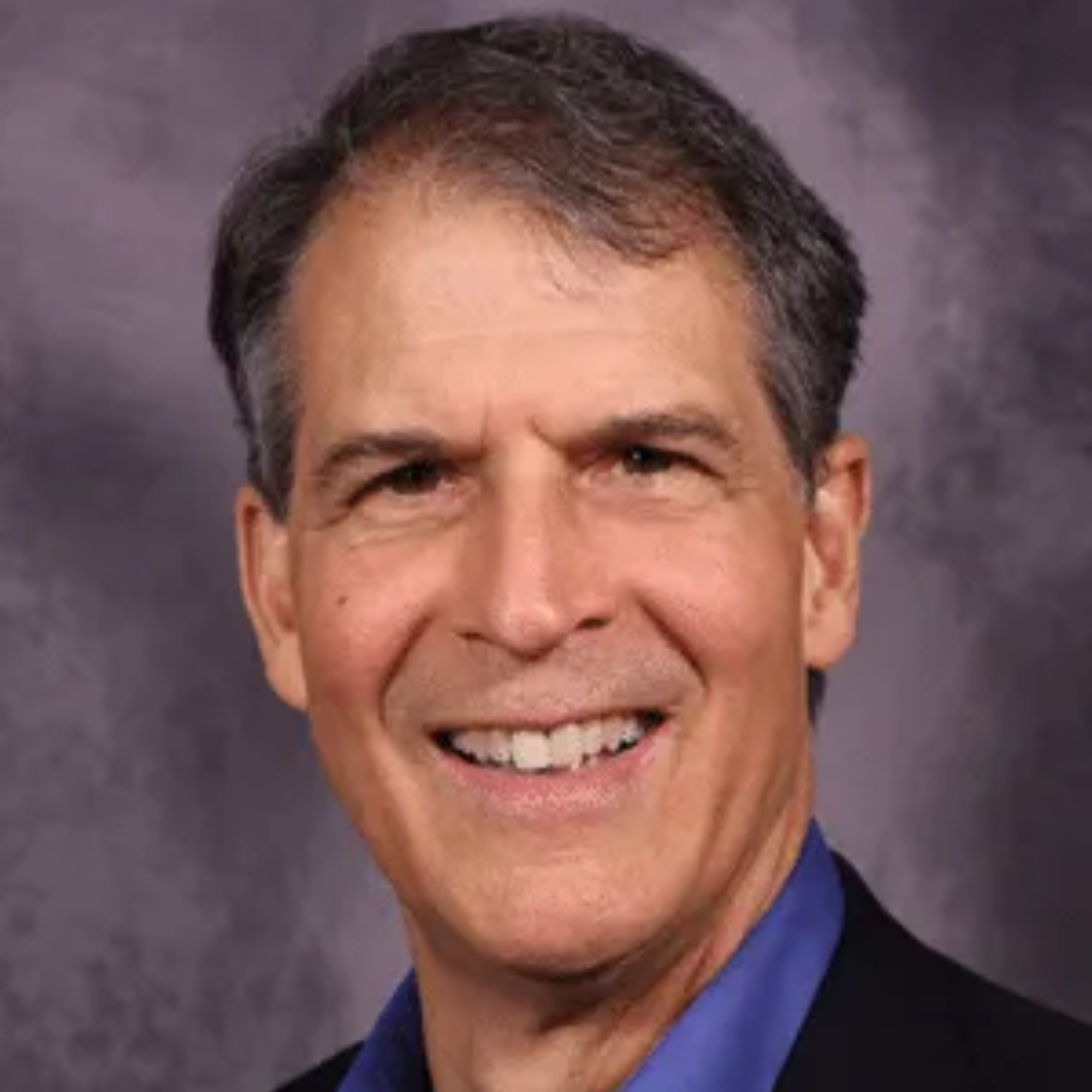
When people talk about near-death experiences, the conversation often gets split in two: either it’s treated as mystical proof, or dismissed as a brain glitch. But for Dr. Eben Alexander, a neurosurgeon who survived bacterial meningoencephalitis and a prolonged coma, the story is more complicated—and more interesting.In this conversation, he explains why he believes consciousness is not produced by the brain, why memory may not be stored where we think it is, and why near-death experiences can change how you live right now. If you’ve ever wondered what NDEs might actually teach us about reality, healing, and the mind-body connection, this is a useful place to start.
The Near-Death Experience That Changed Everything
Dr. Alexander’s near-death experience began in the middle of a catastrophic illness. He woke with a severe headache and back pain, then quickly slipped into a coma and convulsions caused by bacterial meningoencephalitis. By his account, the illness affected all lobes of his brain, leaving no normal pathway for dreaming or hallucination. That detail matters because it shaped how he interpreted what happened next. He emphasizes that this was not a medically induced coma and that the severity of the brain infection was documented later by other physicians. For him, the story is not just personal—it became a scientific puzzle.
During the coma, Dr. Alexander experienced several distinct realms. He describes an initial, primitive state he calls the “Earthworm’s eye view,” followed by a transition into what he calls the Gateway Valley, a vivid realm of light, music, loved ones, joy, and spiritual guidance. Eventually, he says he reached a deeper level he calls the core—an infinite blackness filled with divine love. What stands out in his description is not just the imagery, but the structure. The experience feels like a journey through levels of reality rather than a dream sequence. He repeatedly returns to one theme: the experience felt more real than ordinary waking life.
Dr. Alexander also points out an unusual feature: amnesia. He had no memories of his human identity during the journey, which he believes made the experience unusually “clean” and free from ordinary expectations. That amnesia helped him later appreciate the experience as something distinct from imagination.
Why He Says Consciousness Is Primary, Not the Brain
One of the biggest ideas in the conversation is his rejection of materialism—the view that consciousness is generated entirely by the brain. Dr. Alexander argues that the brain is more like a filter or interface than a producer of consciousness. That is a major claim, but he grounds it in multiple kinds of evidence.
First, he own NDE showed him a consciousness that existed independently of body awareness. Second, he points to decades of neurological observations suggesting that memory and identity are not as neatly localized in the brain as many people assume. Third, he cites quantum physics as a field that, at minimum, complicates the idea of a purely mechanical universe.
Dr. Alexander is especially skeptical of the old Newtonian picture—the idea that everything can be reduced to deterministic physical causes. In his view, quantum mechanics opened the door to a different interpretation of reality, one in which consciousness is not an afterthought but a foundational feature. That may sound abstract, but it has practical implications.
If consciousness is not just a side effect of neurons firing, then your inner life—your attention, intention, compassion, prayer, and meditation—matters much more than a purely materialist worldview would suggest. He also makes a broader philosophical point: once you accept consciousness as fundamental, many puzzling experiences become less dismissible. Near-death experiences, shared death experiences, telepathy reports, terminal lucidity, and spontaneous remission all begin to look like parts of a larger pattern rather than isolated anomalies.
What Life Reviews Teach About Love, Responsibility, and Time
One of the most compelling parts of the interview is Dr. Alexander’s discussion of life reviews. In his own experience, he says he saw life review and reincarnation-like visions in the core realm, but not a full autobiographical review of his own life. He then connects that experience to broader research and cites work by Dr. Bruce Greyson showing that life reviews are common in near-death accounts. According to Dr. Alexander’s summary of that research, life reviews often include:
- The whole life, not just isolated moments
- Events being relived as if they are happening again
- The perspective of other people, not just the experiencer’s own view
- A sense that the experience is more real than ordinary memory
That last point is especially important. If someone relives their actions from the perspective of others, the experience becomes less about judgment and more about empathy. In Alexander’s framing, life reviews function like a cosmic version of the Golden Rule: what you give to others matters because it comes back to you. This is where the conversation becomes less about death and more about daily life.
If the universe is structured in a way that reflects your actions back to you, then kindness is not just morally nice—it is metaphysically important. Your choices shape not only your relationships but your evolution as a soul. Dr. Alexander also stresses that life reviews happen outside ordinary time. That matters because it suggests consciousness is not bound by linear clocks the way the body is.
A 10-minute cardiac arrest, in his view, can contain a vast experiential landscape because the realm itself is timeless. That idea can feel unsettling if you’re used to treating time as the foundation of reality. But it also offers a hopeful message: your life is not just a race from birth to death. It is part of a larger process of learning, remembering, and becoming.
How He Thinks You Can Cultivate Consciousness Today
Although Dr. Alexander’s near-death experience is extraordinary, he repeatedly says you do not need an NDE to access deeper awareness. His practical advice centers on meditation, centering prayer, and sound-based tools that help quiet the “ego voice.” He describes the voice in your head as the “annoying roommate”—a useful phrase for distinguishing ordinary mental chatter from deeper awareness. His point is not that thinking is bad. It’s that most people mistake constant inner narration for the whole self.
To help move beyond that chatter, Dr. Alexander recommends practices that create a relaxed, receptive state. One tool he talks about is binaural beats and differential frequency brainwave entrainment, including the Sacred Acoustics tones he uses personally. He says these tones can help calm anxiety and support meditation by encouraging a kind of oscillation in the brainstem that makes it easier to settle into stillness. He also gives a simple method for beginners:
- Set an intention before you begin by asking a clear question such as, “What do I need to know now?” Keep it simple and sincere.
-
Put on headphones or earbuds. He says channel separation matters for the effect.
-
Focus on your breath and the tones. Don’t try to force an experience.
-
Let the mind become quiet. If images, insights, or memories arise, notice them without chasing them.
-
Stay open. In his view, deep states can surface unexpected material, including emotionally meaningful insights or even hints of past-life material.
What makes this section useful is that he treats consciousness as something you can train. You do not have to wait for a life-threatening event to become more aware, more compassionate, or less ruled by anxiety.
There’s also a measurable side to this. Dr. Alexander references a pilot study by Dr. Anna Yusim that found a reduction in anxiety symptoms over two weeks for people listening to Sacred Acoustics tones. Whether or not you use that specific tool, the larger takeaway is simple: practices that calm the nervous system may also make deeper states of awareness more accessible.
The Bigger Message: You Are More Than a Body
If there is one message that ties this whole conversation together, it is this: you are more than a physical body moving through time.
Dr. Alexander’s view is that consciousness continues beyond bodily death, but he also insists that the real work happens here, in this life. We are here to learn how to love, how to respond, how to act responsibly, and how to evolve through our choices. Near-death experiences may reveal the larger framework, but they do not replace the importance of ordinary living.
He is optimistic that science is slowly moving in this direction and points to research on reincarnation, shared death experiences, terminal lucidity, telepathy, and quantum physics as signs that the old materialist model is incomplete. Dr. Alexander also notes that many scientists are now more willing to ask serious questions about consciousness than they were in the past.
For readers, the practical lesson is not to accept every claim uncritically. It is to become more open to the possibility that reality is richer than the default scientific story you may have inherited. And if consciousness is foundational, then your inner life deserves more attention than you may have given it.
That means making room for reflection, compassion, prayer, meditation, and curiosity. It also means treating other people as deeply connected to you, not separate from you. In Dr. Alexander’s view, that is not just philosophy—it is the structure of reality.
Frequently Asked Questions
What did Eben Alexander experience during his near-death experience? He describes moving through several realms, including a primitive beginning state, a luminous gateway filled with music and loved ones, and a deeper core realm filled with divine love. He says the experience felt more real than waking life.
Does Eben Alexander believe the brain creates consciousness? No. He argues that the brain is more like a filter or interface for consciousness, not its source. He believes consciousness exists independently of the brain.
What is a life review in a near-death experience? A life review is when a person relives major moments—often from the perspective of others affected by their actions. Alexander says this reflects a deeper moral structure in reality.
How can someone explore consciousness without having a near-death experience? He recommends meditation, centering prayer, and sound-based practices like binaural beats. His core advice is to set an intention, quiet the ego voice, and stay open to deeper awareness.
What is the main lesson from near-death experiences? According to Dr. Alexander, the main lesson is that consciousness continues beyond the body and that love, compassion, and responsibility are central to human life.
The Journey Beyond: What Happens After We Die per NDE Survivor John J. Davis